Volunteering at Kempf House
I was excited to discover that Deborah Burling was looking for garden volunteers at Ann Arbor's Kempf House. Deb created a Master Garden Plan and Guidelines, which we are following to restore and repair the garden to the 1890s-1920s period. (After having researched, planted, and maintained an 1860s fountain garden at Cobblestone Farm for five years, I was ready to move on to a non-leading role volunteering in another historic garden.)
Kempf House was built in 1853 in Greek Revival style, but interprets life in the late 1800s. I'd been inside a few times, with my friend Carole, to help decorate for Christmas.
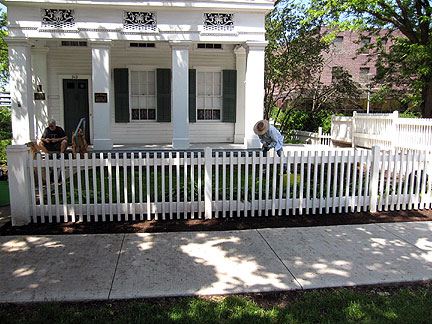 My assignment today was digging soil out of the beds between the fence and sidewalk, moving the soil to other parts of the garden, leveling the area, and adding mulch.
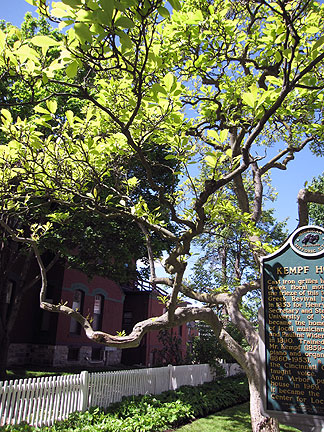 At my first volunteer session on May 9, I weeded around the base of this gorgeous saucer magnolia (Magnolia x soulangeana). It's over 100 years old, and I was sorry to have missed its pink blooms.
 Update: Deb just emailed me a photo of the tree in bloom in April!
I also pulled a ton of goutweed (Aegopodium podagraria) out of various beds--those suckers have crazy roots. I was so glad I had my Fiskars hori-hori with me, because it sure helped. (Thanks again, Gen!)
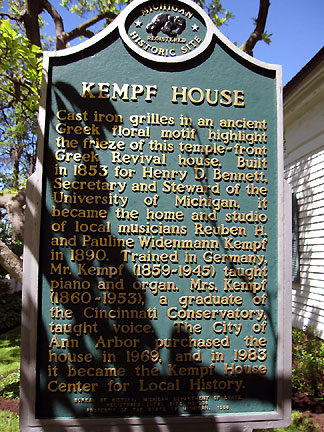 I swear, the German connection is incidental! Ne, wirklich!
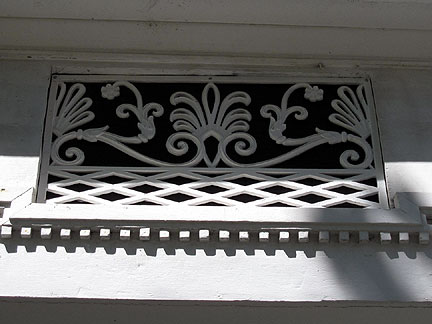 One of the "grilles" mentioned in the sign.
 I took this photo last time. I love how the bloodroot (Sanguinaria canadensis) intermingles with the hosta. The bloodroot flowers early, before the hosta is fully unfurled, and will die back later, letting hosta steal the summer show.
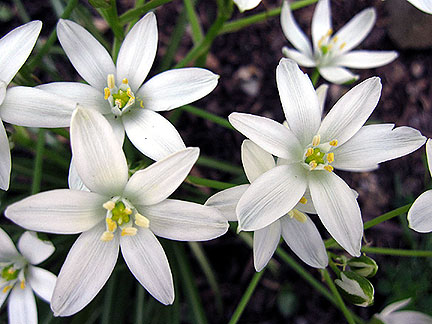 Star-of-Bethlehem (Ornithogalum umbellatum) was blooming today...
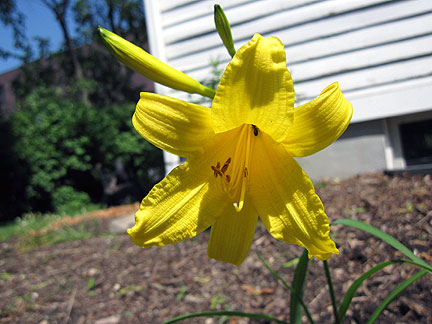 ...as was this NOID lemon yellow day lily. It had a nice scent. The plan is to plant more lilies.
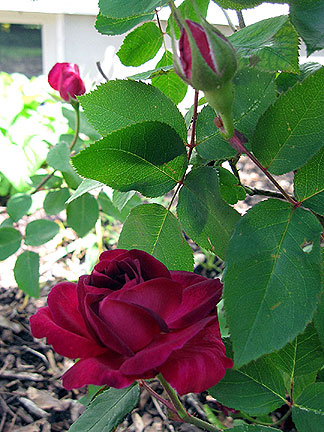 This large NOID rose caught my eye. I liked how the leaves are backlit by the sun so you can see the leaf veins.
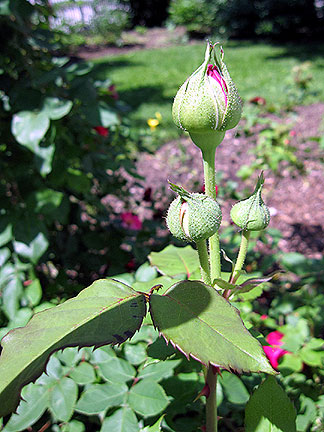 I'm warming to roses... I love how the rugged calyx and the serrated, darker leaf margins.
Touring My Garden
Lots going on; too much to write about.
 I haven't seen the groundhog all season, but someone has eaten my beet foliage. I'm pretty sure it was raccoons, a species I haven't had trouble with before. Someone also ate most of my marrowfat peas, but (knock wood) two remain.
 The turnips remain intact...
 ...as do the radishes, which are almost ready to harvest. (All these veggies were winter-sown.)
 Even though columbine are notorious self-seeders, I've always had trouble growing them in the garden. I have a few plants, but they only get maybe two to five blooms each. Then I find this columbine growing in extreme shade in the brick pathway next to my deck. I get it, Mother Nature, and appreciate your sense of irony.
 Speaking of which, for the first time ever I had trouble getting nasturtium seedlings to sprout... and look what I found growing in the bin with my potatoes! I ask you!
Tooling around North Campus
Last week I was meeting my friend Mary Helen for lunch, and decided to ride my bike the 5 or so miles. I was huffing and puffing, but I didn't have a heart attack. I could even pedal up all the inclines, even those I used to have to walk up. And I made amazingly good time. I was just starting to feel the tiniest bit smug when the Universe humbled me: a 60ish-year-old gentleman (a regular guy in street clothes, not a super-aerodynamic bike racer) passed me at a clip that made me feel like I was standing still. Heh.
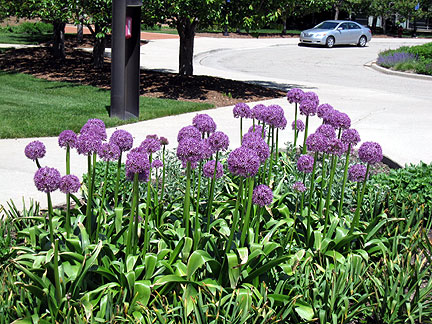 I had my camera with me and used the extra time before lunch to take some photos of the University of Michigan's North Campus. Allium, with no yellowing leaves!
 I almost fell over, I was so shocked to see this Alexander Liberman sculpture. Not just because I oohed and aahed about his work at Meijer Gardens, and totally have a thing for orange, but because I'd never noticed this piece before, despite having been to this part of campus dozens of times over the eight years I worked nearby. Let's just say my job left me preoccupied!
 I also like the Wave Field, which reminds me of Native American mounds.
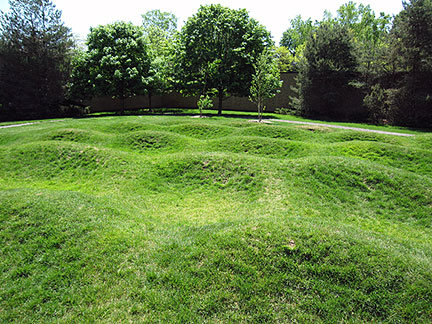 The mounds are only maybe 3-feet tall, but I went ahead and rolled down one anyway. You kind of have to. Well, OK, you might not, but I did.
 "Dude, some lady in a bike helmet just totally rolled down the mound!"
Lots more to catch up on, but I'm heading into the garden now. Happy Sundries Sunday, everyone!