I'm teaching a class on composting at WCC next week. It's always a lot of fun. Chocolate and a breakout session are involved.
I wonder, if you had only one tip, piece of advice, lesson learned, or other wisdom to share with people new to composting, what would it be?
This is the third year I'm teaching this course and my syllabus is all set... but I'm always eager to learn from others and am happy to share anything new I may learn from you, oh so knowledgeable blogging friends!

Showing posts with label edjumaction. Show all posts
Showing posts with label edjumaction. Show all posts
Wednesday, April 14, 2010


Monday, August 17, 2009
Denver Bot: It's Cool! It's Hot!
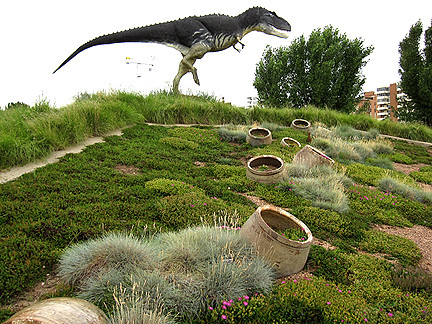 More than a month after my actual trip to the Denver Botanic Gardens, I'm posting my photos. I have to hurry it along as I'll have lots of new photos by the end of next week, after garden trips to Columbus and St. Louis (and Vincennes, IN and Royal, IL!).
I loved Denver Bot as much on my second visit as I did on my first last year. It's right in the middle of the city so it isn't huge, but it consists of many individual gardens, all in different themes, such as:
 ...a water-smart garden,
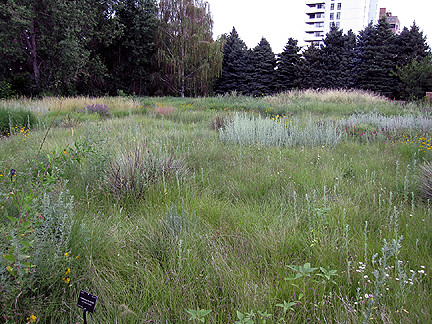 ...a Great Plains garden,
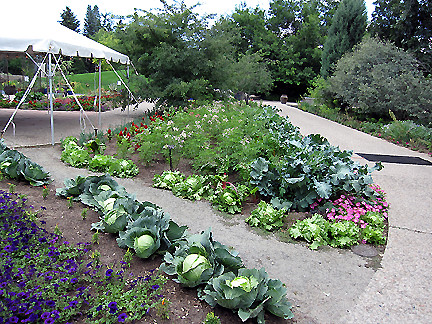 ...a kitchen garden,
 ...a Japanese garden,
 ...and Yuccarama.
The individual garden areas are arranged so you don't see everything at once, but approach each area with delight in discovery. My niece came with me and it was interesting watching her reaction. Even though she has no interest in gardening, I think she found it fun. (She was especially tickled to see the veggies they grew, especially cabbages, as she'd never seen them anywhere but in the grocery store!)
Last year, the Gardens integrated artwork by local teens and young adults into the gardens. This year the theme was Jurassic Gardens and dinosaurs peeked out at you in various locations.
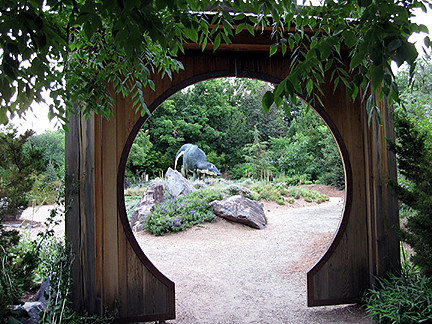
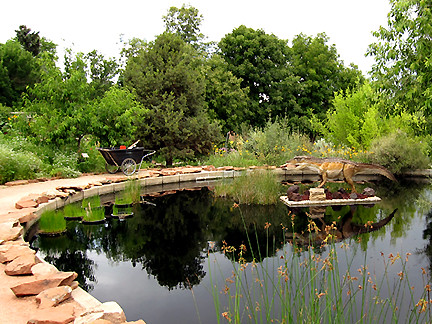

 It was really difficult narrowing down what photos to show you, but hopefully the number makes up for the lack of descriptions. Feel free to comment if you have a question or need an ID.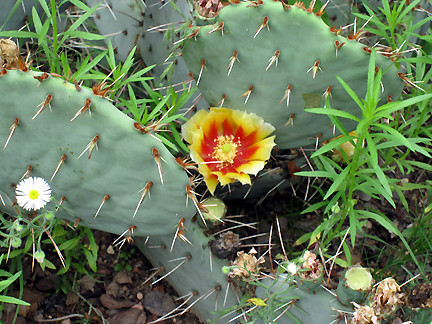

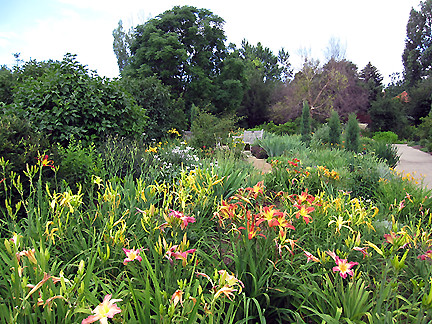

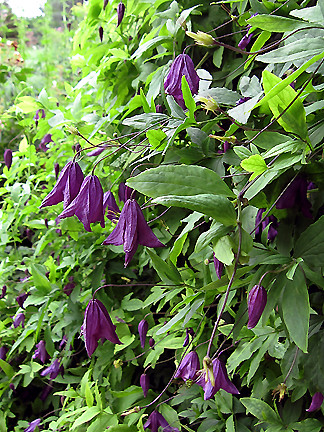
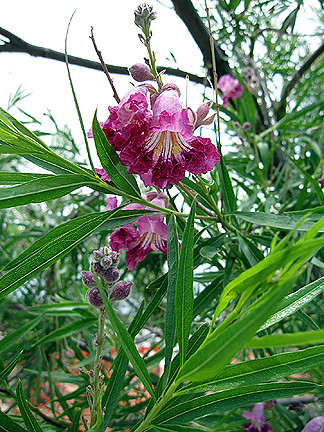
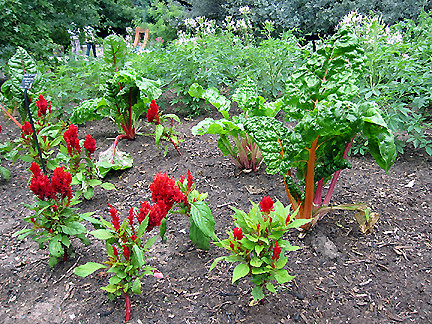
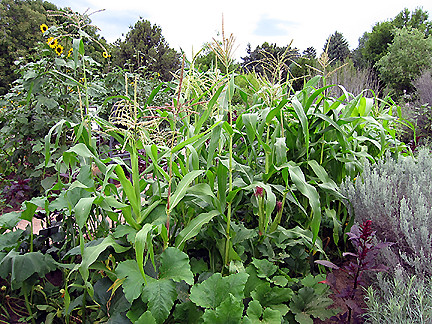


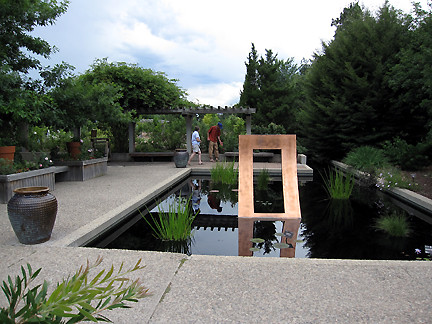
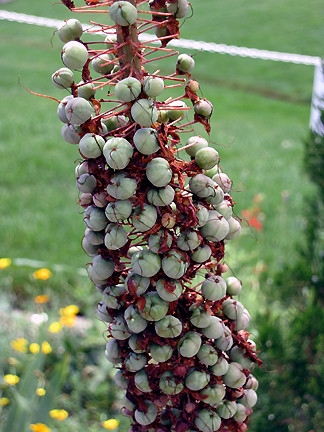

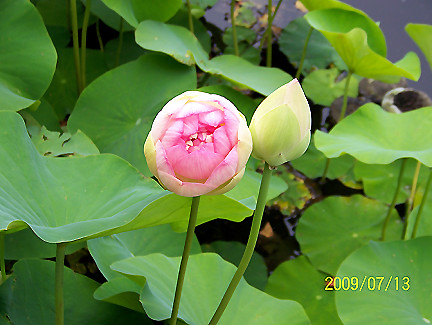

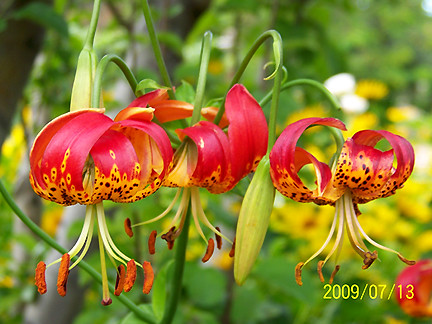
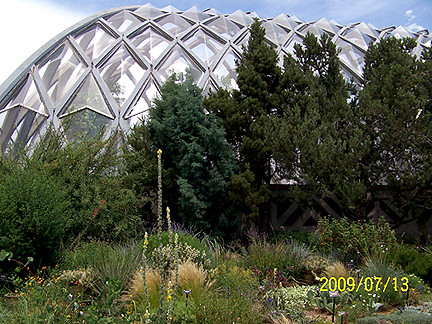

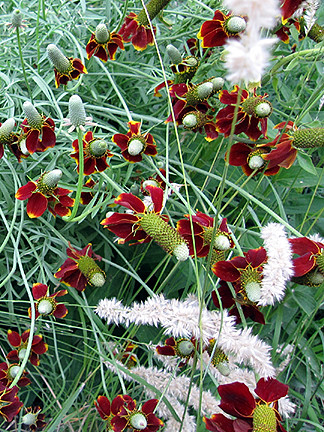
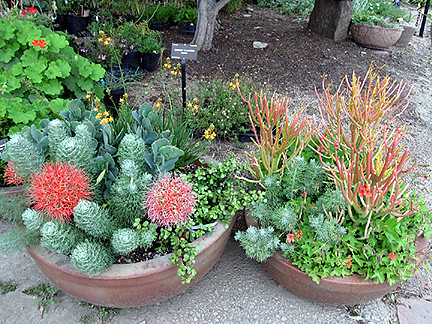
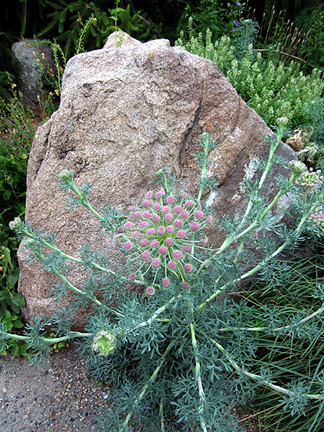

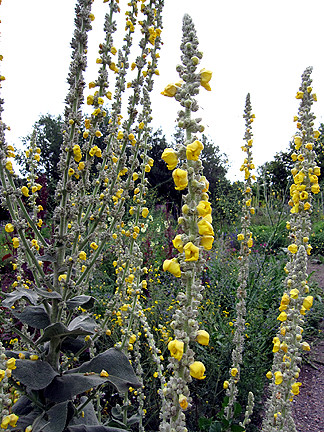
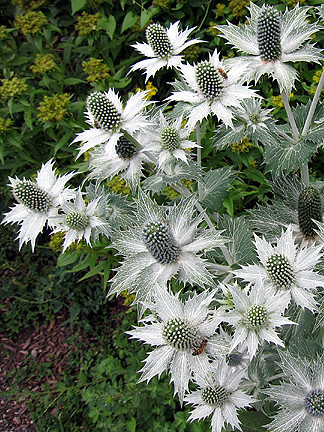
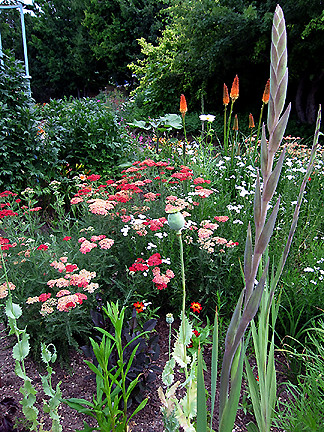 I hope you enjoyed the pictorial essay. For more info on Denver Botanic Gardens, see the blog entries I did last year on Blogger and MLive.
Wednesday, August 12, 2009
Fun in the Fen
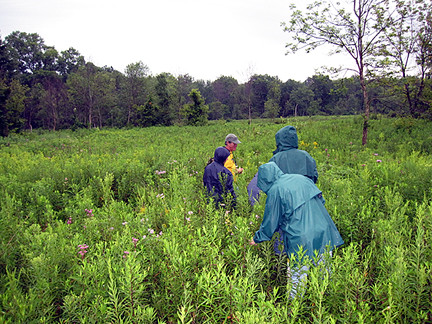 On Saturday, I joined the neighboring Lenawee County Master Gardeners on a tour of Ives Road Fen Preserve led by Chuck Pearson of the Nature Conservancy. It was a rainy morning that turned into a rainy day. We met in downtown Tecumseh, where I was pleased to see several kinds of public plantings:
 Flower boxes along two bridges...
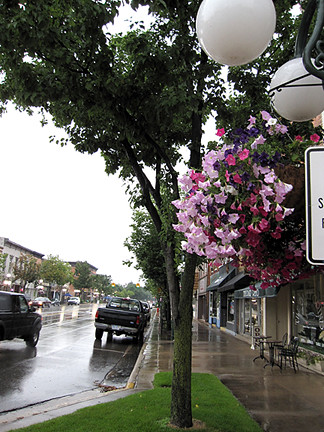 ...hanging baskets on lamp posts on the main street...
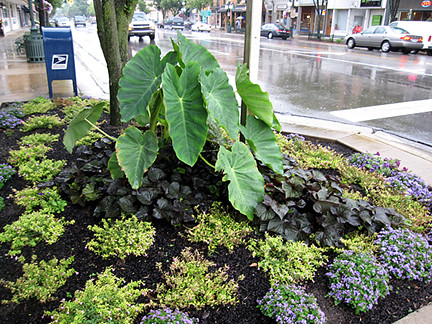 ...and at least four corner beds at intersections. I love, love, love the elephant's ears!
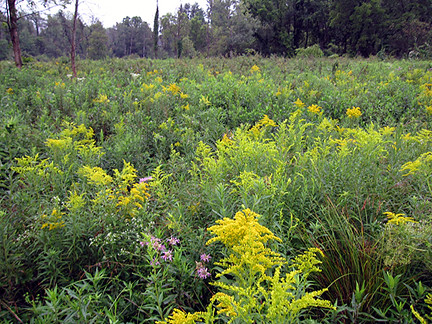 We then carpooled to the fen, which is being maintained by the Nature Conservancy. According to the Michigan Natural Features Inventory, a prairie fen is a wetland community that occurs on moderately alkaline organic soil where cold, calcareous, groundwater-fed springs reach the surface. The flow rate and volume of groundwater through a fen strongly influence vegetation patterning; thus, the community typically contains multiple, distinct zones of vegetation, some of which contain prairie grasses and forbs. Apparently the rare Blachard's cricket frog also calls at Ives Rad Fen, but not at this time of year. All plants here are native to Michigan, except where noted.
 Disclaimer: I'm still getting to know my new camera. I discovered that while I know how to override the flash and use the macro feature, I don't know how to get both to work together at the same time which meant a lot of photos were washed out or blurry. Plus, it was a bit difficult pulling my camera, notepad, and pen in and out of my rain poncho (jot, jostle, drip, smear) while watching where I was walking (slippery! uneven terrain!) and not holding up the people behind me.
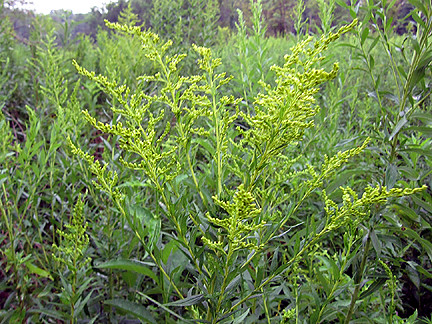 There was quite a lot of tall goldenrod (Solidago altissima). It looks similar to Canada goldenrod (Solidago canadensis), but a lot of the stems had these galls...:
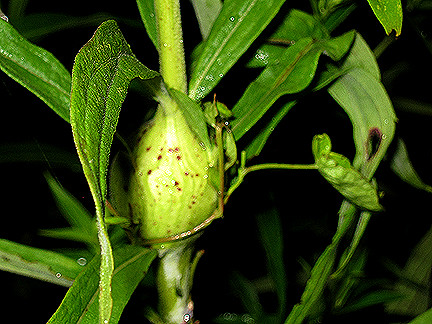 ...and those often occur on tall goldenrod, making IDing easy. Thank you, Nature!
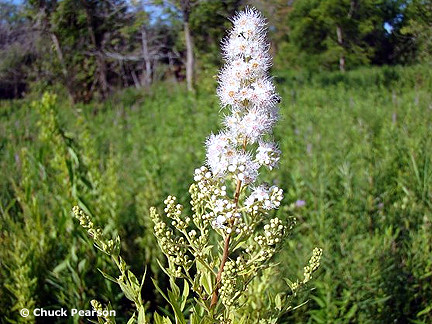 Narrow-leaved meadowsweet (Spiraea alba, a nice white plant for Layanee!)
 In addition to the common orange jewelweed (or touch-me-not) (Impatiens capensis)...
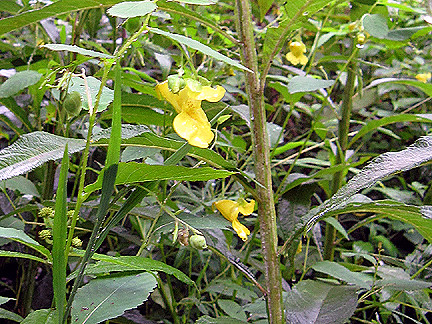 ...there was the more unusual yellow jewelweed.
 Virginia stickseed or sticktight (Hackelia virginiana) is a cool plant that gets bur-like and sticks to your clothes when the seed head dries. Only one flower blooms at a time.
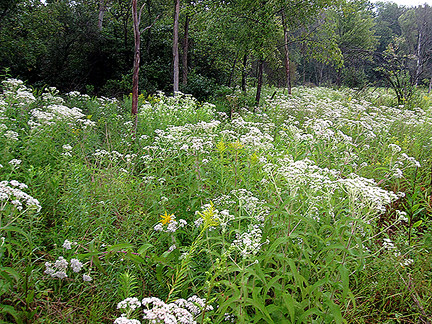 Boneset (Eupatorium perfoliatum) looks lovely in a grouping (especially lovely mixes in with Joe-Pye weed, which like similar wet conditions)...
 ...or on its own. Boneset gets its name because native Americans used it to help set broken bones. You can see at the bottom of the photo that the leaves join to the stem, so it was thought the plant helped bones join.
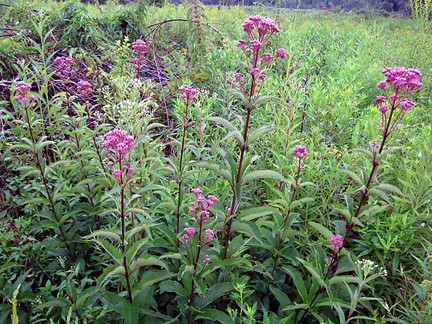 Here's our friend Joe-Pye weed (Eupatorium fistulosum). Noogie! I have some in my own garden.
 Great or blue loebelia (Lobelia siphilitica) is quite striking.
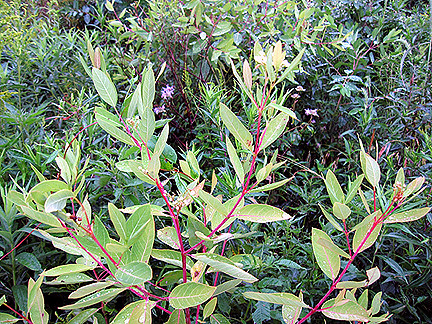 Spreading dogbane (Apocynum androsaemifolium) has white flowers (past bloom) and distinctive red stems, which get redder as the season goes on.
 I'd never heard of horse balm (Collinsonia canadensis) and it's at least 9 feet tall. I like the rain droplets on the seedpods (click for flower in bloom).
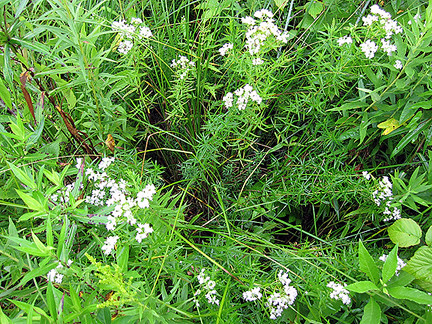 Slender mountain mint (Pycnanthemum tenuifolium) is also in the prairie at the Furstenberg nature area.
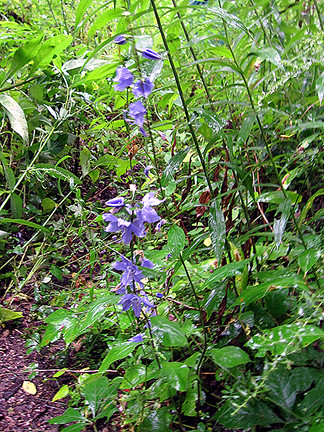 Tall bellflower (Campanula americana) is a stunning shade of blue.
 Hedge nettle (Stachys palustris) is completely cute and harmless, while...
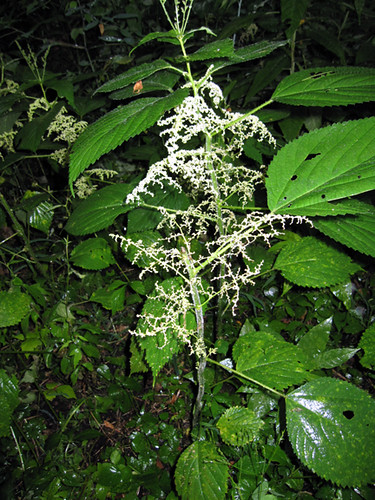 ...stinging nettle (Urtica dioica) is also cute but has hollow hairs on its stem and underneath its leaves, which can irritate the skin if brushed against.. It's not native.
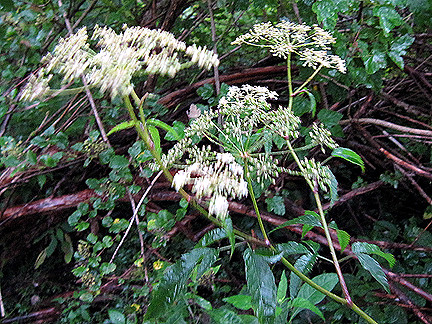 Spotted water hemlock or cowbane (Cicuta maculata) — danger, danger Will Robinson! If swallowed, this plant is fatal or causes permanent neurological damage of the central nervous system.
 Now, poison sumac (Toxicodendron vernix, formerly Rhus vernix) won't kill you but its reaction on the skin is so severe it makes you wish you had poison ivy instead! It has green berries deep in the foliage, which turn white. The flowers/berries form on a red rachis. Also its stems are smooth whereas non-poisonous sumacs have fuzzy stems. Most notably, poison sumac grows in wetlands (such as swamps, bogs, and fens) and not in uplands.
 Moving now from poisonous to unusual, dodder (Cuscuta sp.) is a parasitic flowering plant that has no chlorophyll so it attaches itself onto other plants and "leaches" off them.
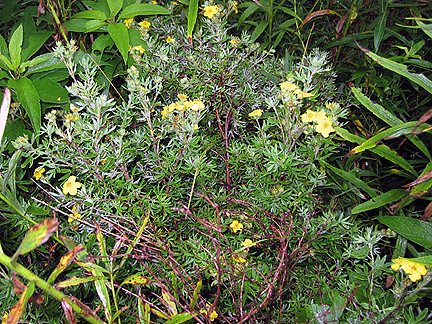 Shrubby cinquefoil (Potentilla fruticosa or Pentaphylloides floribunda)
 Virgin's bower (Clematis virginiana) with purplefringed orchis (Habenaria grandiflora), noogie noog!
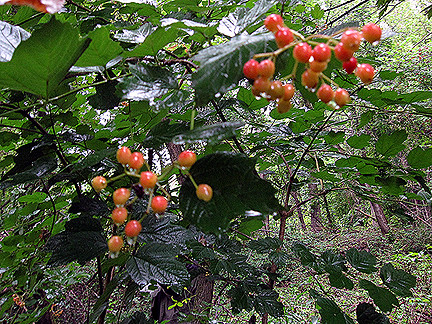 Highbush cranberry (Viburnum trilobum), so sweet, as are all Viburnums, imho, with their flowers, fruit, and fall foliage color.
 Wingstem (Verbesina alternifolia) is not only a cool yellow flower (waves to Tina!), but it gets its name from the leafy edges (or wings) down either side of the stem. It's easier to see them here.
 And, finally, we circled back through yet-to-be-managed/cleared fields, rich in two non-natives, queen Anne's lace and a personal favorite, mullein (Verbascum thapsus, waves to Pete).
Despite wearing a rain poncho (thanks, Karen, for lending it to me!), I was completely soaked (both from falling rain and from brushing up against wet foliage, some taller than me) and completely happy at the end of the hour-and-a-half walk. I'm so excited to have seen a fen. I was expecting it to be more like a bog, where the ground is spongy (and acidic) and the foliage is mostly low. It was a great trip in a great place, that is being well cared for by the Nature Conservancy.
Subscribe to:
Posts (Atom)